Botox for forehead wrinkles in Phnom Penh softens the lines that appear when you raise your eyebrows or squint, by relaxing the small muscles that cause them. At Vera Aesthetics, a doctor studies how your face moves and chooses a low, personal dose so your expressions stay natural. Results vary, and nothing is guaranteed.
How Do Forehead Wrinkles Form, and What Does Botox Do?
Forehead lines form from years of repeated movement. Every time you raise your eyebrows, frown or squint, the muscles under the skin contract and fold it. Over time the folds stay visible even when your face is relaxed. Botox contains a purified protein that reduces the signal from the nerve to a chosen muscle, so the muscle contracts less and the skin above it can smooth.
Dynamic and Static Wrinkles: Which Respond Best?
Dynamic wrinkles appear only when you move your face, and they usually respond well to Botox. Static wrinkles are lines you can still see at rest. They may soften with regular treatment, but deep static lines often need another approach as well, which the doctor can discuss with you.
Which Muscles Does Botox Treat Around the Forehead and Eyes?
The most common areas are the horizontal forehead lines, the frown lines between the eyebrows and the fine lines at the outer corners of the eyes. Each area uses a different muscle, so the dose and injection points are planned separately. Our overview of Botox in Phnom Penh explains the treatment in general.
Who Is a Good Candidate, and Who Should Be Careful?
Botox suits adults who notice expression lines and want them softer without changing the shape of the face. It is most often chosen from the late twenties to the forties, when lines first become visible.
- Good candidates: adults with visible expression lines who are in good general health
- Be careful or wait: pregnancy or breastfeeding, certain nerve or muscle conditions, an allergy to an ingredient, or a skin infection where the injection would be placed
Your doctor reviews your health history during the consultation and tells you whether Botox is appropriate for you.
The Botox Process for the Forehead and Eye Area
A session is short and simple. A typical visit follows these steps:
- Consultation: the doctor asks about your goals and medical history.
- Face reading: you raise your eyebrows, frown and smile so the doctor can see how each muscle works.
- Dose planning: injection points are marked and the dose is set for your face.
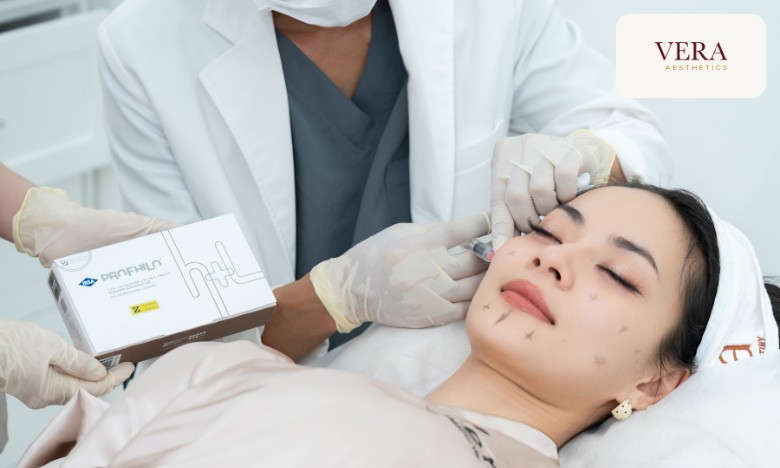
- Injection: very fine needles place small amounts of Botox, which takes around 10 to 20 minutes.
- Aftercare advice: the doctor explains what to do and what to avoid in the following days.
Most people return to normal activities straight away. A few small red dots or slight bruises can appear and usually fade quickly.

Will My Face Look Frozen? How a Doctor Keeps Expressions Natural
A frozen look usually comes from too high a dose or from injection points that do not match how the face moves. A careful plan does the opposite: it uses low doses, treats the forehead and the frown area in balance and leaves some movement so you can still look surprised or happy.
If you want a very light effect, tell the doctor. A softer plan can be repeated and adjusted later, which is safer than trying to fix a result that is too strong. Vera Aesthetics aims for a natural, rested look and does not promise a specific outcome.

When Will I See Results, and How Long Do They Last?
Botox does not work immediately. Results usually become visible within 3 to 7 days and continue to improve for about two weeks. On average they last around 4 to 6 months, depending on your muscles, your metabolism and the dose.
As the effect fades, the muscles slowly return to normal and the lines come back to how they were. Many people plan a repeat visit before the lines are fully back, and the doctor adjusts the plan each time.
Aftercare and Safety Tips After Botox
A few simple habits help the treatment settle:
- Stay upright for about four hours and avoid lying flat
- Do not rub or press the treated area for the first day
- Skip intense exercise, sauna and strong heat for 24 hours
- Wait before facials or strong massage on the forehead, as your doctor advises
- Contact the doctor if you notice a drooping eyelid, uneven eyebrows or any other concern
Botox is considered safe when it is given by a trained doctor using an authentic product, but side effects can happen. Our guide to whether Botox is safe and what side effects to expect covers the details.

Frequently Asked Questions About Botox for Forehead Wrinkles
Does Botox for forehead lines hurt?
Most people feel only small pinches. A numbing cream can be used if you are sensitive, and the session is short.
Can I combine Botox with filler or a skin booster?
Yes, often. Botox relaxes the muscles that cause lines, filler restores lost volume and a skin booster improves hydration. The doctor chooses the order and timing for you.
How often do I need to repeat Botox?
Many people repeat it every few months. The best timing depends on how fast your muscles recover, and your doctor can adjust it.
Will my wrinkles look worse when Botox wears off?
No. The muscles return to how they moved before treatment, so the lines return to their earlier level rather than becoming worse.
Conclusion
Botox for forehead wrinkles in Phnom Penh works best with a low, personal dose and a plan that keeps your expressions natural. A consultation lets the doctor read how your face moves and tell you honestly whether Botox is the right choice.
Message Vera Aesthetics on Messenger or Telegram, or call 060 628 688, and our doctor will look at your expression lines and suggest a Botox plan that suits you.